
Who Wants a Headless Brain?
April 20, 2026
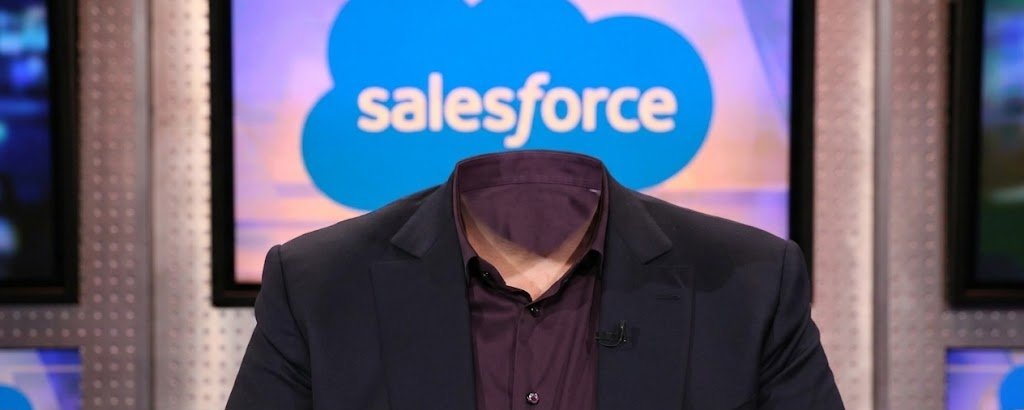
Last week Salesforce announced Salesforce Headless 360 for Saleforce, Agentforce & Slack.
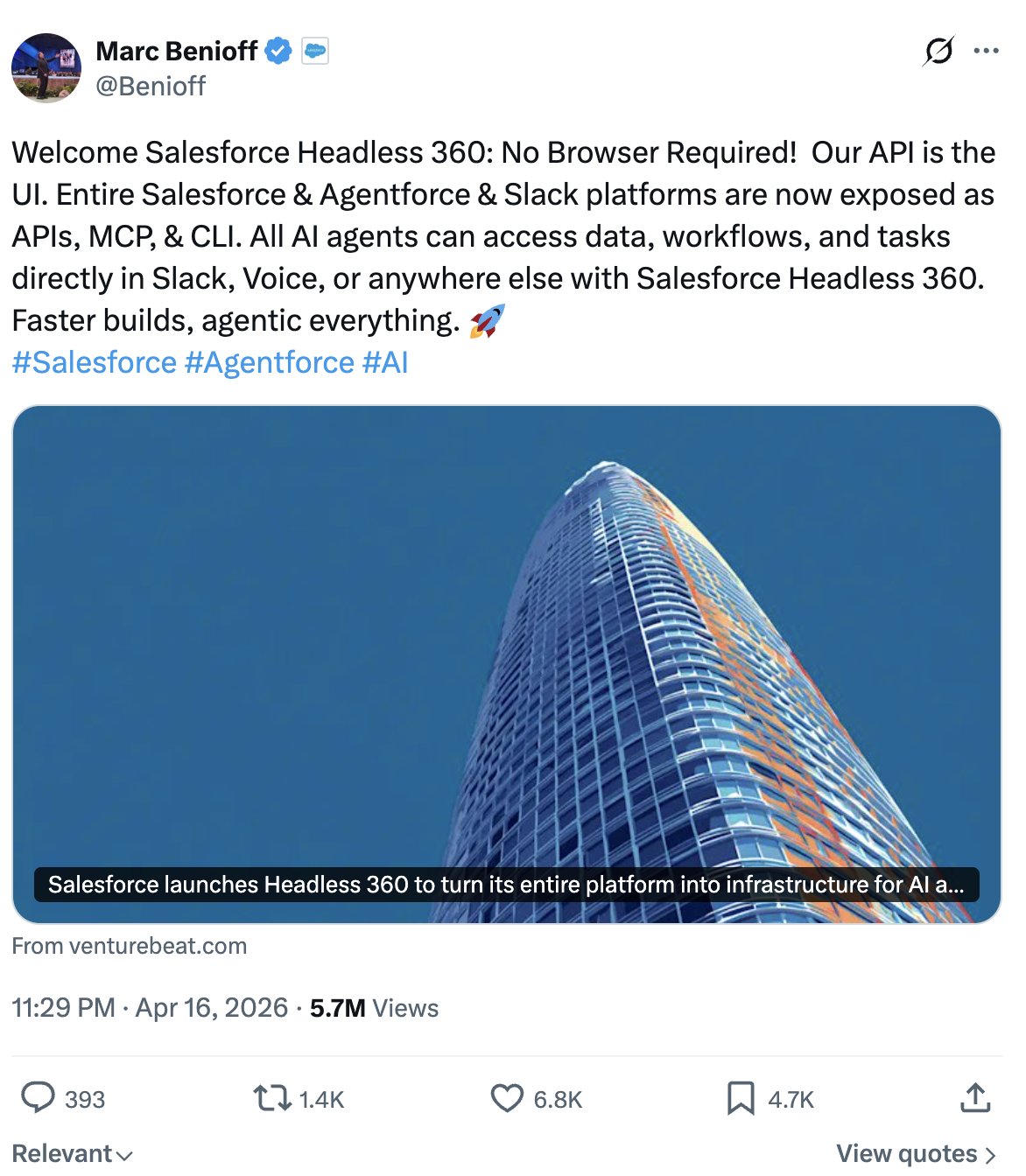
The responses were mixed. Many jumped in offering their support, saying it was smart, others were trying to figure out exactly what it means. I personally do believe it is “correct”. Marc is brilliant at recognizing where the world is going and reshifting the positioning of Salesforce to capture the latest narrative. They’ve been on-demand, cloud, social, mobile, agent, and now headless.
Interestingly, I believe a headless CMS makes complete sense for a CRM system. Agents are going to need a sales system-of-record upon which to operate, and they will be best able to do so unencumbered by AI. Agents will analyze opportunities, update pipeless, suggest next steps, and assist a seller in the whole enterprise sales workflow. They’ll run CS.
However, a headless chat system - Slack - is a bit more challenging to digest. The point of a chat system is for human-to-human collaboration. Yes, Agents can be in the workflow when humans are in the loop. But going through a messaging platform is not an efficient way for Agents to talk directly. They will build their own APIs (and even possibly invent their own language!) to just get things done directly. Why go through an enterprise messaging system to get work done?
The argument for headless Slack is that Slack, with its messaging history, should be the context layer for the company. This is backwards. Chat is one data source among many. Meeting transcripts, code, CRM, office presence, project management, docs, email, calendar — most of what a company knows lives outside of Slack. The idea that you dump all of that into Slack so Slack can feed context to an agent gets the architecture exactly inverted. Context layers consume from systems of record. They aren’t themselves systems of record.
And, you have to just imagine how much Salesforce intends to charge and upsell for all of this. Salesforce is a notoriously ruthless pricing optimizer. Slack used to offer monthly billing by active users. No more. Now, it’s all prepaid upfront for the year. There are aggressive upsells and long term contracts. In the era of agents, don’t most companies want to move towards shorter-term usage based contracts?
So what is the head? Ben Lang of Cursor said it best:

An AI-native communication and work environment, not retrofitted. It pulls context from every system of record the company runs on. It’s where humans and agents coordinate, where work gets orchestrated and made visible, and where the interface is designed for both at once. Agents talk to each other through structured protocols, not enterprise chat. Humans work through the head, not alongside it.
Companies of the future want an AI native way to communicate and deliver context to AI agents, with AI native packing and pricing models. Agents will need a way to communicate as well. And companies will want a way to orchestrate and visualize the work going on. The system won’t be headless. It will have a giant head and be filled with a huge brain.