
What Apple’s New CEO means for Virtual Office Platforms
April 21, 2026
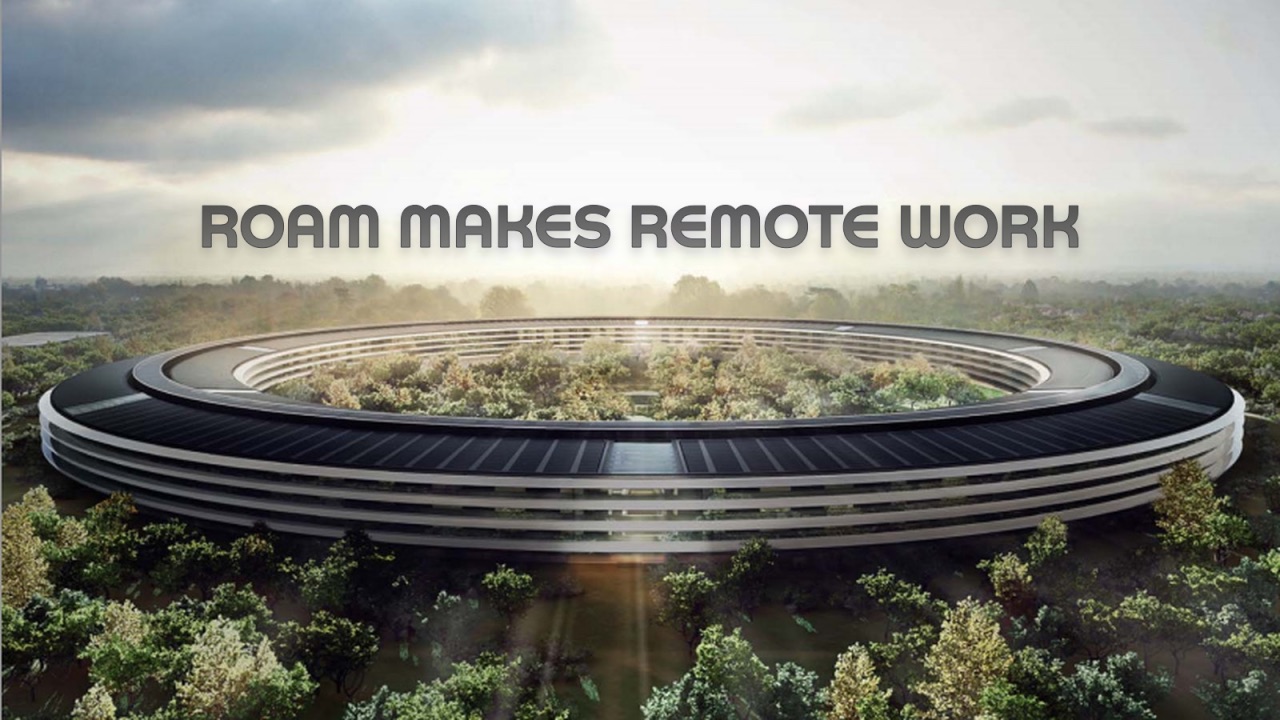
I reflected a bit about the appointment of John Ternus as CEO, and I think that Apple is entering a new phase that may redefine not just its products, but the very concept of work itself. As the company transitions from the era of Tim Cook to a hardware-driven leadership model, it is increasingly positioned to champion a world where the “office” is no longer a place, but a distributed system powered by a mesh of intelligent devices. In that framing, Apple is not just building tools for productivity, it is laying the groundwork for fully realized virtual offices, where computation, communication, and collaboration happen seamlessly across devices, anywhere.
Ternus represents a return to Apple’s product-first DNA. His reputation inside the company is that of a meticulous builder, someone who prioritizes user experience over technological spectacle. At the same time, Apple has elevated Johny Srouji to oversee all hardware engineering. Srouji is widely regarded as the architect of Apple Silicon, one of the company’s most successful strategic bets in recent history.
I think that this alignment is critical because the future of AI at Apple will not be defined purely by models: it will be defined by where those models run.
We’ve been seeing Apple preparing for on-device AI for years. Neural Engines, efficient memory architectures, and tightly integrated OS’s have laid the groundwork for running increasingly sophisticated models locally. The rationale is straightforward: privacy, latency and reliability.
Apple already runs non-trivial machine learning workloads on-device, from speech recognition to image processing. In iOS 26, we got access to optimized Foundation Models that can now execute directly on mobile hardware, enabling a new class of applications.
For more complex tasks, Apple appears to be adopting a hybrid strategy, forming partnerships with external model providers, including systems associated with Google’s Gemini ecosystem, while maintaining strict control over privacy layers and orchestration.
By the time iOS 27 arrives, my expectation is not simply a “smarter Siri,” but a system-level coordinator: understanding user intents across apps, executing multi-step workflows automatically, and surfacing relevant information proactively
Apple has already laid much of the infrastructure for this through frameworks like App Intents and Shortcuts. The missing piece is an adaptive system capable of interpreting context and routing actions accordingly.
We, developers, remain first-class participants, exposing capabilities that the system can orchestrate through these frameworks. AI becomes a layer of composition and orchestration rather than a replacement for apps. OpenClaw but on your iPhone and not leaking your data everywhere in some sense!
So we’re gearing toward a more productive iOS. While not being itself a paragon of remote work, Apple effectively owns the stack of modern mobility: iPhone for communication, iPad for flexibility, and MacBook for high-performance portable computing.
What has been missing is deeper contextual awareness: systems that understand what users are doing, not just where they are. On-device AI enables complex workflows between expert apps, spanning multiple devices and platforms, while preserving the users’ data privacy. We’re preparing for these at Roam, with deeper system integration.
In this model, the office is no longer a location. It becomes a distributed system of devices and interactions, stitched together by intelligence.
If successful, Apple will not just build smarter devices. It will make intelligence ambient, available anywhere, at any time, without friction or compromise. And in doing so, it may finally deliver on a long-standing promise: that anyone, anywhere, can create, work, and think differently. It’s an exciting time to be developing and innovating on these platforms!